
Your Brain Was Never Designed for Screens: Scientists Discover How Nature’s Hidden Geometry Activates a Neural Ability Modern Life Is Destroying
For millions of years, the human brain evolved inside a world of fractals, patterns, rhythms, and natural complexity. But today, we live inside artificial environments that may be starving our nervous

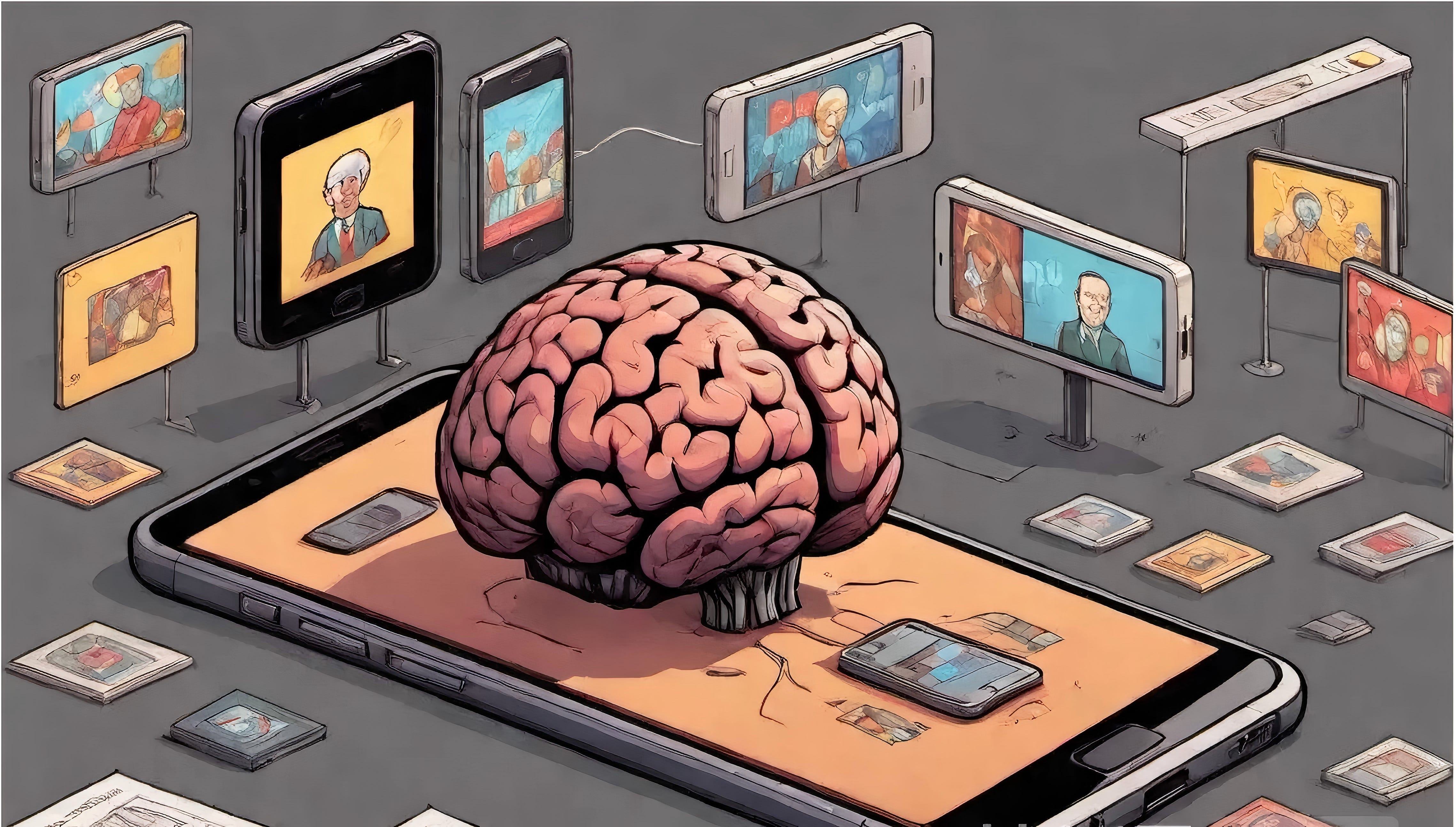
You wake up.
Before your feet touch the floor, your brain has already consumed hundreds of artificial images.
Notifications.
Emails.
Messages.
Social media feeds.
Bright rectangles demanding attention.
Your eyes move thousands of times across a glass screen before you even experience the real world.
And yet, something feels wrong.
You feel mentally exhausted even when you haven’t done anything physically demanding.
You struggle to focus on one task.
You walk into nature for a few minutes and suddenly feel calmer.
Your thoughts slow down.
Your breathing changes.
Your mind becomes quieter.
Why?
For years, we assumed this was simply because nature was “relaxing.”
But neuroscience suggests something far more fascinating:
Your brain may not simply enjoy nature. It may be biologically designed for it.
And modern environments may be depriving your nervous system of a visual language it has depended on for millions of years.
The Hidden Pattern Your Brain Was Born To Recognize
Look at a tree.
A coastline.
A cloud formation.
A snowflake.
A river system.
A fern leaf.
At first glance, these objects appear random.
But they are not.
They contain repeating mathematical patterns known as fractals.
A fractal is a structure where similar patterns appear at different scales.
A tree branch divides into smaller branches.
Those branches divide again.
A river splits into smaller streams.
A mountain range repeats similar shapes from massive landscapes down to tiny rocks.
Nature is full of complexity that follows hidden order.
And your brain has been exposed to these patterns for almost the entire history of human evolution.
Before cities.
Before offices.
Before smartphones.
Before endless digital information.
Your ancestors spent their lives surrounded by fractal environments.
The human visual system evolved inside forests, grasslands, oceans, and skies.
Not spreadsheets.
Not fluorescent lighting.
Not infinite scrolling.
The Strange Connection Between Nature and Your Nervous System
One of the most surprising discoveries in environmental neuroscience is that certain natural patterns appear to interact with the brain differently than artificial environments.
Researchers studying environmental psychology and neuroscience have found that viewing natural scenes can influence stress responses, attention restoration, and emotional regulation.
A key idea behind this is Attention Restoration Theory, proposed by psychologists Stephen Kaplan and Rachel Kaplan.
The theory suggests that modern life constantly demands “directed attention” — the exhausting mental effort required to focus, filter distractions, and ignore competing information.
Your phone does this all day.
Your computer does this.
Your crowded workplace does this.
Nature works differently.
It captures attention in a softer way.
A flowing river.
Moving leaves.
Cloud patterns.
Bird movements.
These stimuli attract the mind without aggressively demanding control.
Your brain gets a chance to recover.
The Modern Office Is Fighting Millions of Years of Evolution
Here is the uncomfortable truth:
The problem may not be that you lack discipline.
The problem may be that your environment is constantly sending your brain signals it was never designed to process.
Imagine taking a machine built to run in a forest and forcing it to operate inside a factory.
It might function.
But over time, something changes.
Your brain is incredibly adaptable.
But adaptability has a cost.
The same neural systems that once helped humans survive in complex natural environments are now being hijacked by artificial environments optimized for attention capture.
Your brain evolved to notice:
movement in the trees
changes in light
animal patterns
weather shifts
natural rhythms
Now it is trained to notice:
message alerts
advertisements
breaking news
social approval signals
endless novelty
The ancient survival system has been redirected toward digital stimulation.
The Forgotten Intelligence Hidden Inside Natural Geometry
Here is where the story becomes even more interesting.
Nature’s complexity does something screens rarely do:
It challenges the brain without overwhelming it.
A completely simple environment creates boredom.
A completely chaotic environment creates stress.
But nature often exists between these extremes.
Scientists call this complexity with order.
Your brain appears to prefer information that is rich enough to explore but predictable enough to understand.
This may explain why people often report feeling restored when walking through forests, looking at oceans, or sitting near natural landscapes.
The brain is not switching off.
It is processing.
But it is processing in a different mode.
A calmer, more integrated mode.
Why Screens Feel Addictive But Nature Feels Restorative
There is another hidden difference.
Digital environments are designed around reward prediction.
Every notification.
Every refresh.
Every new post.
Every unexpected message.
creates small bursts of anticipation.
Your brain is constantly asking:
“What comes next?”
This uncertainty activates reward pathways.
But nature provides something different.
Instead of unpredictable stimulation, it offers structured variation.
The movement of leaves.
The changing patterns of sunlight.
The rhythm of waves.
Your brain receives complexity without the psychological pressure of needing to respond.
One environment consumes attention.
The other restores it.
The Dangerous Loss We Rarely Talk About
The modern world has solved countless problems.
We live longer.
We communicate instantly.
We have access to unlimited information.
But there is a hidden trade-off:
We have created environments that are technologically advanced but biologically unfamiliar.
A child today may spend thousands of hours looking at artificial images before spending meaningful time observing natural patterns.
A worker may spend 90% of the day surrounded by straight lines, screens, and artificial lighting.
A person can go weeks without experiencing the visual complexity that shaped the human brain.
And we wonder why so many people feel:
mentally tired
emotionally numb
unable to focus
constantly overstimulated
Perhaps the question is not:
“Why are we becoming less focused?”
Perhaps the question is:
“What happens when a brain designed for nature is forced to live inside a digital simulation?”
The Neuroscience of Returning to What We Lost
The solution may not require abandoning technology.
The answer is not escaping civilization.
The answer may be rebuilding a relationship with the environment our brains evolved with.
Small changes may matter:
A walk through a park.
A view of trees from your window.
Natural light in the morning.
Time near water.
Plants inside your workspace.
Looking at clouds instead of another screen during a break.
These seem simple.
Almost too simple.
But evolution rarely creates systems that require complicated solutions.
Often, the body is waiting for signals it already understands.
The Final Revelation
For thousands of years, humans looked at nature and felt something they could not explain.
A forest felt calming.
The ocean felt powerful.
Mountains created awe.
People assumed these reactions were poetic.
Emotional.
Spiritual.
But neuroscience is revealing another possibility:
Your brain recognizes nature because nature helped create your brain.
The patterns outside you mirror patterns inside you.
The geometry of forests.
The rhythm of waves.
The complexity of clouds.
They are not just scenery.
They are part of the environment your nervous system remembers.
And perhaps the greatest danger of modern life is not that we have too much technology.
It is that we have forgotten the biological language our brains were built to understand.
The Next Question Is More Urgent:
If your brain evolved for a world of natural complexity, what exactly happens when you spend decades surrounded by artificial patterns?
How are screens changing attention, memory, creativity, and emotional regulation?
And what daily “neural reset” habits can help reverse the invisible damage of modern environments?
The answers reveal a surprising connection between ancient human evolution, neuroscience, and the future of mental health — and this is what we will explore next.
If you want to understand the hidden forces shaping your mind before they shape your future, consider becoming a paid subscriber.
If you enjoyed this article and would like to support more deep, valuable, and thought-provoking content, you can buy me a coffee ☕
Your support is more than a tip.
It helps an independent creator keep writing, stay free, and continue producing meaningful work without being driven by algorithms.
Every cup of coffee helps fuel the next article worth reading.
Thank you for reading until the end.
The most valuable thing online isn’t traffic—it’s people like you who choose to support real value.
If this article spoke to you, share it.
Someone else may be waiting for the insight you discovered today.
How do think pensioners most of whom are
struggling to make ends meet can afford to pay money for things like this, when paying is luxury very few can afford.
BTW, Im certain the human brain was designed to adapt, because anyone versed in designing a human body would know how to do that. We know animals adapt to their living conditions. So why not humans as well? Perhaps thats one of the purposes of the so called junk DNA.